
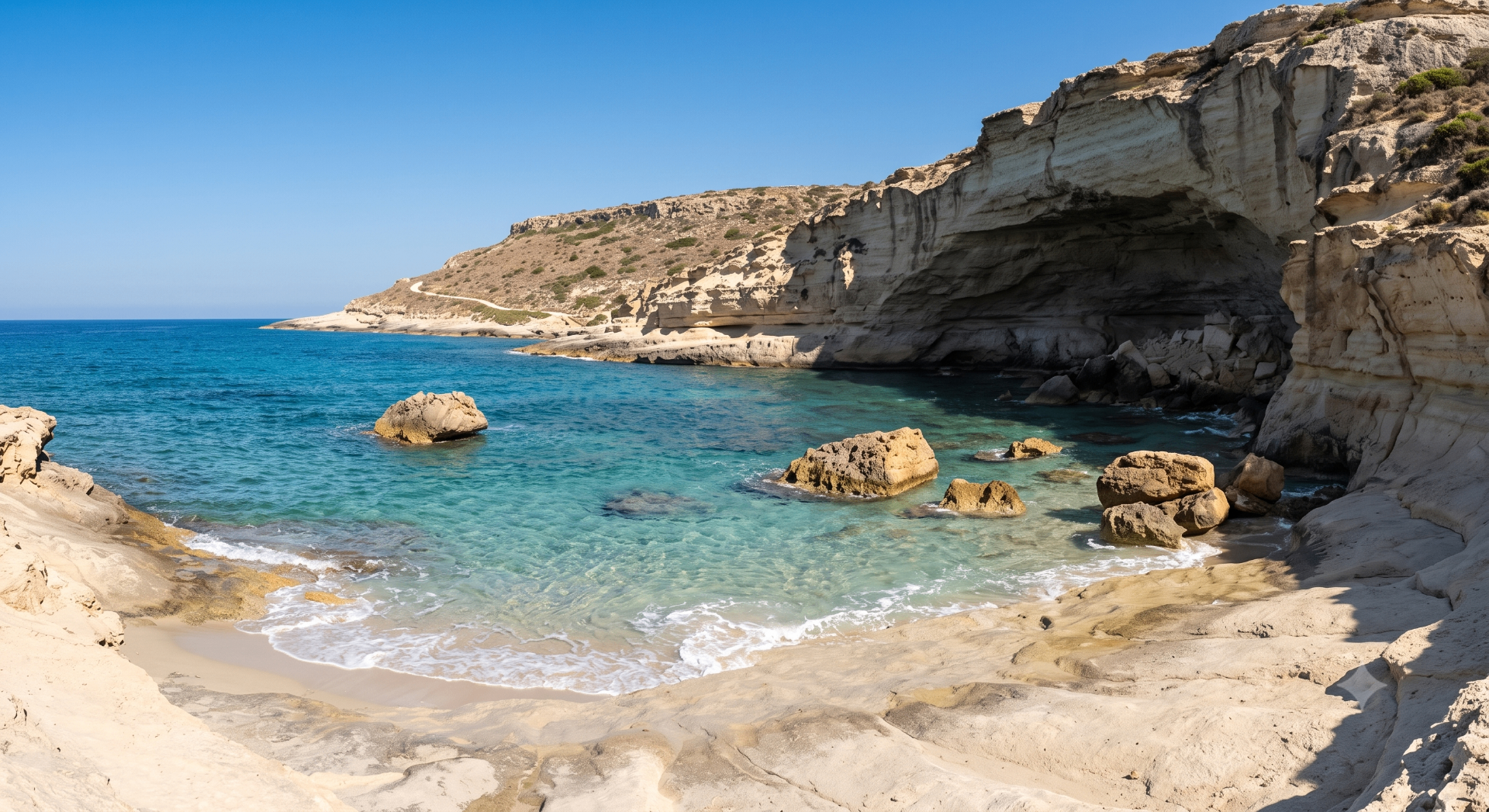
 Local Tip · Great for a morning dive
Marsalforn
Għar Qawqla
A beloved local swimming spot just around the corner from Marsalforn bay. Clean, deep waters and natural rock shelves to lie on.
36.0722° N · 14.2611° E
Hand-picked places from our doorstep in Marsalforn — the beaches locals keep quiet, the tavernas worth the walk, and the wild wonders you'll want all to yourself.
Local Tip · Great for a morning diveA beloved local swimming spot just around the corner from Marsalforn bay. Clean, deep waters and natural rock shelves to lie on.
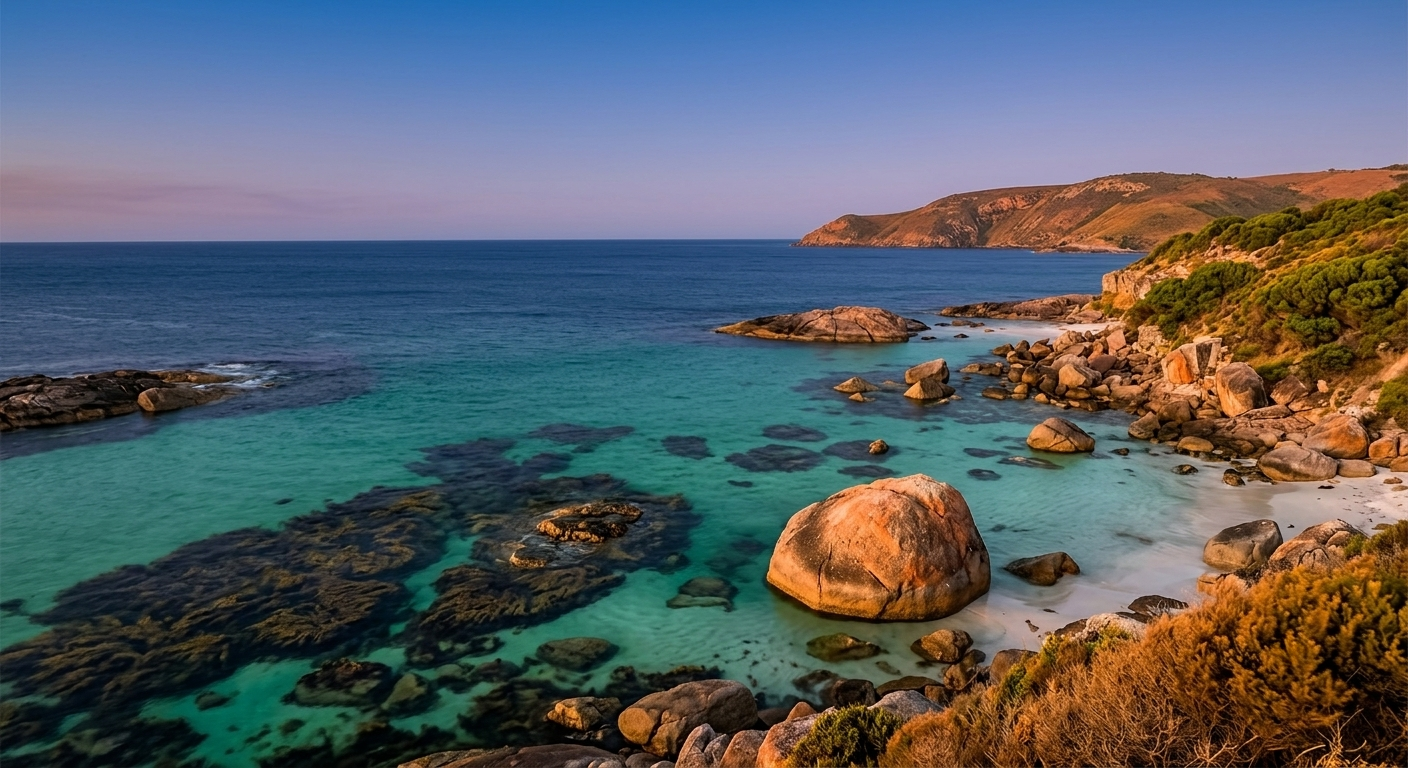 Local Tip · Bring water & shade
A wild, remote beach hidden beneath clay slopes. Reached via a scenic trek from Marsalforn or Ramla — pure seclusion.
"Wake early. Walk the promenade before it stirs. Order a cappuccino at the corner café where the fishermen mend their nets — that's the Gozo we love most."
Gozo is fourteen kilometres long and reached by a twenty-five minute ferry from Ċirkewwa in northern Malta to Mġarr harbour, or by the fast catamaran from Valletta. Buses fan out from Victoria, the hilltop capital, so almost every journey passes through it; from Marsalforn the 310 reaches Victoria in about ten minutes, and from there the 322, 311, 308 and 305 serve Ramla Bay, Dwejra, Ta' Pinu and the Ta' Ċenċ cliffs.
The north coast around Marsalforn is where the island is at its most photogenic: the 350-year-old Xwejni salt pans, the narrow fjord of Wied il-Għasri, and the cliff path to Għajn Barrani. West lies Ta' Pinu Basilica and the terraced fields of Għarb; east are the Ġgantija temples at Xagħra, older than Stonehenge, and the red sand of Ramla.
Seasons matter. May, June, September and October give warm sea and empty paths; July and August bring the festas, the busiest bays and the best swimming; winter is green, walkable and quiet, with most restaurants still open in Marsalforn and Victoria. A hire car helps for the far west, but a stay in Marsalforn works perfectly well on foot and by bus — which is exactly how we recommend spending the first few days.
Marsalforn was a fishing village long before it was a resort, and it still empties and fills with the boats. Mornings begin at the bakery and the kiosk on the promenade; by mid-morning swimmers have taken the ladders at Qbajjar and the rock shelves at Għar Qawqla; by evening the tables along the water are full and the whole bay turns copper as the sun drops behind the salt pans. Everything a week needs — supermarket, pharmacy, clinic, bank, dive centres, a dozen restaurants — sits within a few minutes' level walk, which is why we suggest guests leave the car parked for the first two days and simply learn the village on foot.
Eating here is unhurried and genuinely local. Expect fresh lampuki in late summer, rabbit slow-cooked in wine and garlic, ftira baked flat and loaded with tuna, olives and capers, and Gozitan cheeselets that turn up in everything from salads to ravioli. Book a table for Friday and Saturday evenings in July and August; the rest of the year you can walk in. Village wine is cheap and good, the coffee is Italian in temperament, and the pastizzi at the kiosk cost less than a euro.
Beyond the bay, the island rewards short trips. The Citadel in Victoria takes an hour to walk and gives you the whole of Gozo from its ramparts. Ġgantija at Xagħra predates the pyramids. Dwejra, Ta' Pinu and the cliffs at Ta' Ċenċ fill an afternoon each. Comino and the Blue Lagoon are a boat ride from Mġarr, best taken early before the day trippers arrive. And the festas — Santa Marija in August, the Nativity of Mary in September — are the island at its most itself: brass bands, fireworks over the water, and streets that stay awake far longer than you planned to.